Jean-Honoré Fragonard
Jean-Honoré Fragonard brought movement and imagination to decorative painting, portraits and scenes of everyday life. His lively handling of paint is closely associated with French Rococo art.
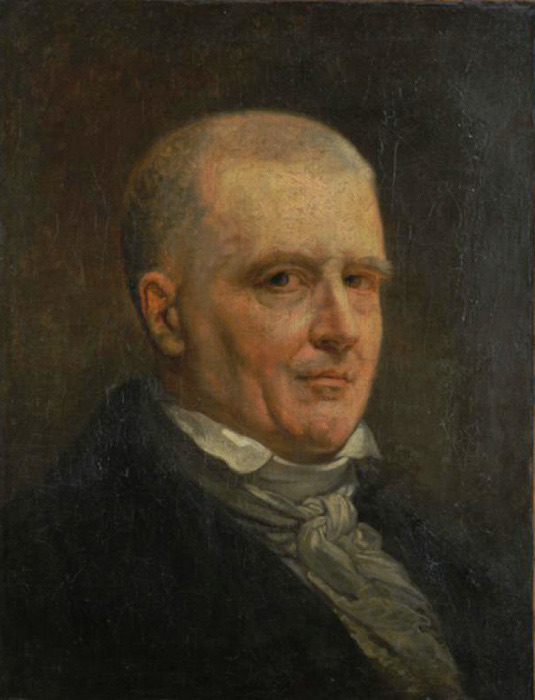

Born: 1732
Died: 1806
Birthplace: Grasse, France
Nationality / cultural identity: French
Art movements / traditions: Rococo
Jean-Honoré Fragonard: Life, The Swing, and Rococo Painting
More Than the Painter of The Swing
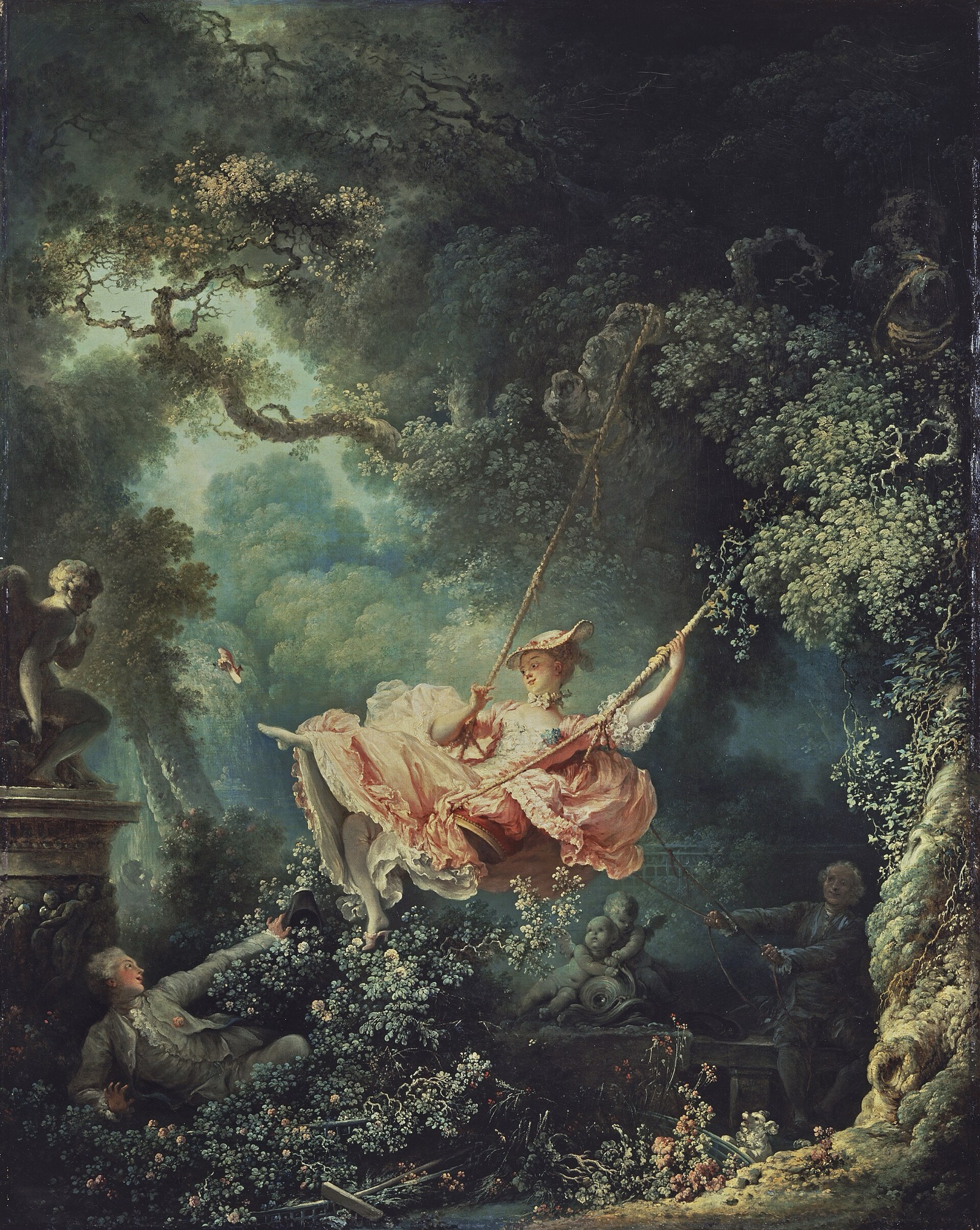
Jean-Honoré Fragonard is one of the artists most closely associated with eighteenth-century French Rococo painting. His best-known picture, The Swing, seems to contain everything people expect from the style: a secluded garden, elegant clothing, playful erotic intrigue, soft color, theatrical movement, and an atmosphere of pleasure suspended outside ordinary life.
But Fragonard’s career was much larger than that single image.
He was trained for the prestigious public profession of history painting, won the Prix de Rome, spent years studying in Italy, mastered monumental academic composition, became an exceptional landscape draftsman, painted portraits and domestic scenes, worked on ambitious decorative cycles, and developed one of the most energetic brush styles of his generation.
Fragonard is especially interesting because he achieved success within the official French art system and then chose not to build the conventional career that success seemed to promise. After the triumph of Corésus and Callirhoé at the Salon of 1765, he increasingly turned away from large public commissions and toward private patrons. That decision gave him unusual freedom. He could paint a monumental mythological tragedy one year and an intimate love scene, fantasy portrait, landscape, or rapidly brushed cabinet picture the next.
Across those different subjects, the most consistent feature is movement.
Figures reach, swing, retreat, lean, read, embrace, or turn. Dresses seem to ripple. Branches bend. Water glimmers. Paint remains visibly active on the surface. Fragonard’s subjects often concern fleeting experiences—desire, surprise, reading, play, courtship, secrecy—and his technique makes those moments feel as though they might disappear almost as soon as they are seen.
Early Life and Training
Fragonard was born in Grasse in southern France in 1732. His family moved to Paris while he was still young.
He briefly worked as a clerk before his talent redirected him toward art. His first important training came through two painters whose approaches could hardly have been more different.
Jean-Baptiste-Siméon Chardin was known for still lifes and quiet scenes of domestic life. Fragonard spent only a short time in his studio, and modern National Gallery scholarship cautions against making Chardin into a long-term master. Fragonard then entered the studio of François Boucher, one of the dominant painters of mid-eighteenth-century France.
Boucher’s influence was more decisive. His mythological scenes, pastoral fantasies, graceful figures, brilliant color, and sensual decorative style offered Fragonard a model for how painting could combine narrative with visual pleasure.
Fragonard developed quickly enough that Boucher supported his entry into the Prix de Rome competition. In 1752, Fragonard won first prize with Jeroboam Sacrificing to the Idols.
Before leaving for Rome, he studied at the École Royale des Élèves Protégés under Carle Van Loo. There he received additional preparation in history painting, the classics, and the academic traditions expected of an artist destined for major public commissions.
Italy and the Discovery of Landscape
Fragonard lived in Italy from 1756 to 1761 as a student at the French Academy in Rome.
His official academic exercises were only part of what he learned there.
He became close to Hubert Robert, another French artist fascinated by landscapes, ruins, gardens, and architecture. Fragonard also formed a relationship with the abbé de Saint-Non, an amateur artist, collector, and patron who encouraged his drawing.
Together, Fragonard and Robert explored villas, gardens, ruins, and the countryside around Rome. During the summer of 1760, Fragonard worked at the Villa d’Este in Tivoli, producing red-chalk drawings that rank among the great landscape studies of the eighteenth century.
Those drawings reveal something fundamental about his mature art.
Fragonard did not treat a garden as empty scenery waiting for figures. Trees have mass and motion. Deep shadows interrupt bright passages. Architecture is partly swallowed by vegetation. Paths disappear. Fountains, walls, trunks, terraces, and foliage build spaces that feel both observed and dreamlike.
The gardens that later surround the lovers in The Swing and The Progress of Love grow out of this serious engagement with landscape.
On the journey back to France, Fragonard traveled through Italy with Saint-Non and produced hundreds of drawings after architecture, landscapes, and works of art. Drawing became one of the foundations of his career, not merely preparation for paintings.
The Great Public Success of 1765
Back in Paris, Fragonard worked on smaller paintings for private collectors, but in 1765 he made a spectacular public statement.
Corésus Sacrificing Himself to Save Callirhoé was exhibited at the Salon that year. The Louvre painting is enormous—more than three meters high and four meters wide—and shows Fragonard working in the prestigious tradition of history painting.
Its subject comes from an ancient story recorded by Pausanias. Corésus, a priest, is ordered to sacrifice Callirhoé, the woman he loves. Instead, he kills himself.
Fragonard turns the moment into a theatrical explosion of bodies, drapery, architecture, smoke, movement, and supernatural light. The scale and complexity demonstrate that he could compete at the highest level of the academic hierarchy.
The painting was admired, and critic Denis Diderot wrote enthusiastically about it. Fragonard received probationary acceptance into the Académie royale.
A conventional career path now seemed open to him.
He did not take it.
Fragonard never completed the reception painting required for full Academy membership. National Gallery scholarship notes that slow reimbursement from the crown for Corésus may have contributed to his decision, but whatever the combination of reasons, the result was clear: Fragonard increasingly preferred private clients to the official public career of a history painter.
That choice shaped nearly everything that followed.
From Public History Painter to Private Artist
Private patronage changed the scale and freedom of Fragonard’s work.
Instead of depending primarily on royal commissions and public Salon exhibitions, he could make paintings for aristocrats, financiers, collectors, and members of court society. These works were often intended for private rooms rather than monumental public spaces.
The subject matter changed accordingly.
Fragonard painted lovers, games, conversations, domestic interiors, children, fantasy figures, landscapes, and decorative ensembles. Some pictures are openly erotic. Others are sentimental, comic, meditative, or psychologically ambiguous.
The smaller scale also encouraged a different kind of technique.
Fragonard could leave a stroke visible rather than smoothing it into academic finish. Clothing might be built from quick ribbons of color. Leaves could be suggested with flicks of the brush. A background might remain loose while a face received more careful modeling.
His painting became increasingly responsive to the speed of perception.
This is part of what makes Fragonard feel surprisingly modern. He does not always hide the process by which the picture was made. The viewer can often see the decisions, accelerations, scratches, thick passages, thin washes, and rapid turns of the brush.
The Swing — about 1767–1768
The Swing, now in the Wallace Collection, is Fragonard’s most famous painting and one of the defining images of French Rococo art.
Its unusual commission is recorded in the journals of Charles Collé.
According to Collé, an unnamed gentleman of the court initially asked the history painter Gabriel-François Doyen to depict the gentleman’s young mistress on a swing while he admired her from below. Doyen declined and referred the commission to Fragonard.
Fragonard transformed that private joke into an extraordinarily sophisticated painting.
A young woman in a pink silk dress swings forward through an overgrown garden. Her admirer lies partly concealed among the plants below. On the opposite side of the composition, an older man operates the swing. A slipper flies from the woman’s foot.
The painting seems effortless, but its movement is carefully organized.
The ropes form powerful diagonals. The woman’s body is suspended rather than grounded. Her dress opens outward like a flower. Her shoe extends the arc of movement through the air. The admirer reaches upward. Trees and branches curve around the action instead of forming a stable architectural frame.
Even the sculptures participate.
At the left, a version of Étienne-Maurice Falconet’s Menacing Cupid raises a finger to his lips, reinforcing the atmosphere of secrecy. Other sculptural forms echo love, desire, and concealment.
Color is equally important.
The Wallace Collection highlights the contrast between the woman’s pink dress and the blue-green garden. She becomes the brightest and most mobile object in a darker world of foliage, shadow, stone, and water.
The Swing succeeds because every part of the painting serves the same emotional condition: instability. The lovers’ arrangement is secret, the woman is literally suspended in motion, and the garden seems to shift around her.
Young Girl Reading — about 1769
Young Girl Reading offers a completely different mood.
A young woman sits in profile, absorbed in a small book. Unlike The Swing, nothing obvious is happening. The emotional effect comes from concentration and stillness.
Yet the surface itself is extremely active.

National Gallery of Art technical research shows that Fragonard painted much of the picture wet into wet. The yellow dress is built from broad, visible strokes of lemon, gold, warm brown, and cooler violet notes. The cushion is similarly energetic.
Fragonard even used the handle of his brush to scratch through wet paint in the white collar and bodice, exposing the darker layer beneath and creating fine linear detail.
The face is handled more delicately.
That contrast is important. Fragonard did not simply paint everything loosely. He controlled where the painting should accelerate and where it should slow down. The face and reading gesture hold the viewer’s attention while the dress preserves the physical energy of its making.
Technical study has also changed the way the picture is understood.
A drawing discovered in 2012 linked Young Girl Reading closely to Fragonard’s group of fantasy figures. Imaging then revealed that the woman originally faced outward toward the viewer, more like the other figures in the series. Fragonard returned to the canvas after the first version had dried and repainted her head in profile.
The change transformed the painting.
What may initially have been a theatrical, outward-facing portrait became a private moment of absorption.
The Fantasy Figures and Painting as Performance
Fragonard’s so-called figures de fantaisie are among the clearest demonstrations of his fascination with painterly speed.
These half-length men and women wear elaborate, old-fashioned or theatrical costumes. Their identities were debated for generations, and scholars were not even certain whether many represented real people.
The discovery of a sheet of annotated sketches in 2012 clarified several identities and linked the paintings more firmly to members of Fragonard’s social and artistic circle.
Even when the sitters can be identified, however, the paintings resist ordinary portrait conventions.
Costume, gesture, and brushwork are as important as likeness.
The Metropolitan Museum’s fantasy figure of Marie Emilie Coignet de Courson with a Dog shows Fragonard working rapidly into wet paint and incising lines through the surface. Broad strokes remain visible rather than being polished away.
The painting therefore performs two things at once: the personality or social identity of the sitter and the virtuosity of the artist.
Fragonard makes the speed of painting part of the spectacle.
The Progress of Love — 1771–1772 and 1790–1791
The Progress of Love is Fragonard’s most ambitious surviving decorative project.
In 1771, Madame du Barry, the official mistress of Louis XV, commissioned four large canvases for a new pavilion at Louveciennes designed by Claude-Nicolas Ledoux.
Fragonard painted The Pursuit, The Meeting, The Lover Crowned, and Love Letters in 1771–1772.
Together they turn courtship into a sequence unfolding through elaborate garden spaces.
In The Pursuit, a young man approaches a woman with a rose. In The Meeting, a lover climbs toward a woman in a dramatic garden setting. The Lover Crowned presents intimacy within a lush decorative environment. Love Letters shifts toward a more settled and reflective relationship.
The gardens are crucial.
Figures are surrounded by trees, flowers, sculpture, fountains, architecture, and cascading vegetation. Fragonard does not separate narrative from setting. The garden itself becomes a language of intimacy, concealment, growth, and emotional change.
The original four paintings were returned to Fragonard by 1773.
Why Madame du Barry rejected them has been debated. The panels were eventually replaced by more Neoclassical decorations by Joseph-Marie Vien, but it is safest not to claim one definitive explanation for the rejection.
Fragonard kept the pictures.
Around 1790, during the revolutionary period, he brought them to his cousin’s house in Grasse. In 1790–1791 he expanded the ensemble with ten additional canvases, turning the original sequence into a fourteen-picture decorative environment.
That second life gives The Progress of Love an unusual history.
A project created for the private world of Louis XV’s court was reconstructed in provincial France after the fall of the Bastille. The same paintings therefore bridge the culture of the Ancien Régime and the radically different world produced by the Revolution.
The Bolt — about 1777–1778
The Bolt, or Le Verrou, shows the darker and more psychologically tense side of Fragonard’s treatment of love.
The Louvre dates the painting to about 1777–1778 and records that it was made for the marquis de Véri.
A man embraces a woman while reaching dramatically toward the bolt of a bedroom door. The bodies, drapery, furniture, and sweeping diagonal of the man’s arm create intense physical pressure.
Fragonard originally conceived the painting as a pendant to an Adoration of the Shepherds.
The Louvre explicitly describes the pairing as a contrast between sacred and profane love.
That juxtaposition is important because The Bolt is not simply another cheerful Rococo courtship scene. Its atmosphere is far more charged.
The woman’s gesture and the man’s action have led to different interpretations of the encounter. The painting does not need to be forced into a single narrative certainty.
What is visually undeniable is the tension.
The action of closing the door becomes the structural climax of the picture. Fragonard uses diagonal movement, compressed space, twisted fabric, and physical proximity to create an image in which desire and unease coexist.
Marriage, Family, and Later Collaboration
Fragonard’s erotic paintings have encouraged later writers to imagine an equally libertine personal life.
The evidence is much less dramatic.
In 1769, Fragonard married Marie-Anne Gérard, a miniature painter from Grasse. Musée du Luxembourg scholarship emphasizes that many of the famous romantic affairs later attributed to Fragonard were nineteenth-century inventions.
The strongest surviving accounts instead describe him as a committed husband and father.
His family also became part of his artistic world.
Marie-Anne’s younger sister, Marguerite Gérard, joined the household and developed into a successful painter. During the 1780s she worked closely with Fragonard, and the two sometimes collaborated.
Their shared artistic environment coincided with Fragonard’s growing interest in more intimate interior scenes and domestic subjects.
This context helps separate Fragonard’s biography from the stories inside his erotic paintings. An artist can investigate libertinism, desire, secrecy, or seduction without those pictures functioning as autobiography.
Drawing: The Speed of an Idea
Fragonard was one of the outstanding draftsmen of eighteenth-century France.
His drawings range from red-chalk landscape studies to pen-and-wash narratives, copies after earlier masters, and rapidly brushed compositions.
The Villa d’Este drawings demonstrate his command of landscape. Large trees, terraces, architecture, and figures can be suggested with remarkable economy.
Later wash drawings often reduce the scene even further.
Dark and light masses establish atmosphere before details are fully described. A few broad marks can create a tree, wall, shadow, horse, or moving body.
Drawing allowed Fragonard to preserve the speed of thought.
That quality connects directly to his paintings.
In both media, rapid execution does not necessarily mean carelessness. A fast stroke can carry information about weight, direction, light, and emotion that would disappear if it were repeatedly corrected and smoothed.
What to Look for in a Fragonard Painting
Start with movement.
Look for the largest diagonal lines in the composition. Swing ropes, reaching arms, twisting branches, bodies, flying garments, furniture, and garden paths often push the eye away from stable vertical and horizontal order.
Then look at how the paint moves.
Fragonard may build fabric from thick, direct strokes and leave neighboring colors partly unmixed. Foliage can be made from flicks rather than individually drawn leaves.
Compare different areas of finish.
A face may be carefully modeled while clothing remains visibly brushy. That contrast is intentional. Fragonard uses degrees of finish to control attention.
Look for wet-into-wet handling.
When one color is placed directly into another before the lower paint has dried, the edge can remain soft and lively. This technique contributes to the sense that the picture was made quickly, even when the composition was carefully considered.
Search for scratched lines.
In some works, Fragonard used the wooden end of his brush to incise details into wet paint. Young Girl Reading provides a particularly clear example.
Watch hands and gestures.
A reaching arm, offered flower, lifted skirt, raised finger, hidden face, book, or flying shoe can carry an extraordinary amount of narrative information.
Study the setting.
In Fragonard, gardens and interiors are rarely neutral. A dense garden can conceal lovers. Furniture can compress bodies together. Architecture can make a scene theatrical.
Notice where color is most intense.
Fragonard frequently concentrates pink, yellow, red, or blue in a figure and surrounds it with softer earth, green, gray, or shadow tones. Color becomes a way of directing attention.
Finally, do not separate subject from technique.
The Swing feels unstable partly because its figures are unstable, but also because the brushwork, branches, diagonals, fabric, and light all reinforce that sensation.
Rococo—and More Than Rococo
Fragonard is correctly identified with Rococo art.
His paintings often include the qualities associated with the style: asymmetry, elegant movement, pastel or luminous color, erotic or amorous subjects, elaborate gardens, decorative rhythm, and preference for pleasure over heroic seriousness.
Yet the label becomes limiting when it is treated as a complete explanation.
Corésus and Callirhoé proves Fragonard’s command of serious history painting.
His Italian drawings demonstrate disciplined landscape observation.
The fantasy figures turn portraiture into an experiment in speed and performance.
Young Girl Reading transforms a theatrical portrait into a quiet psychological moment.
The Bolt is emotionally more difficult than the stereotype of carefree Rococo pleasure.
His later genre paintings and collaborations with Marguerite Gérard also reflect growing interest in intimate domestic life and the Dutch-inspired goût hollandais.
Fragonard did not simply repeat a fashionable decorative formula. He constantly shifted style according to subject, patron, scale, and purpose.
The Revolution and the End of an Artistic World
The French Revolution transformed the society that had supported Fragonard’s career.
Many of his patrons belonged to the aristocratic and financial elite of the Ancien Régime. The private spaces, social rituals, and culture of luxury associated with works such as The Swing and The Progress of Love no longer occupied the same position.
During the revolutionary period, Fragonard left Paris for Grasse and took The Progress of Love canvases with him. There he reinstalled and expanded the cycle in his cousin’s house.
He returned to Paris in 1793.
According to current National Gallery of Art scholarship, his old acquaintance Jacques-Louis David helped secure him a position as a curator at the new national museum.
The contrast between the two artists is striking.
David’s rigorous Neoclassical painting became closely associated with the political and public culture of the revolutionary era. Fragonard’s mature identity had been built around private patrons, painterly freedom, intimate interiors, gardens, love, and the social world of the previous regime.
Fragonard’s artistic production declined during the final decade of his life.
It would be simplistic to say that he suddenly lost his ability. The world around his art had changed. Styles that had once felt sophisticated and desirable were increasingly regarded as remnants of an earlier culture.
He died in Paris in 1806.
Fragonard’s Rediscovery
Fragonard’s reputation declined during much of the nineteenth century as Rococo art became associated with the excesses of the Ancien Régime.
Later collectors, writers, and museums helped restore interest in eighteenth-century French painting.
Today Fragonard is recognized not simply as a painter of charming erotic scenes but as one of the great technicians of his century.
His brushwork is central to that reputation.
He understood that paint could describe an object while also remaining visibly paint. A yellow dress can be fabric, light, color, and a record of the painter’s hand at the same time.
His drawings are equally important. Their economy and speed reveal an artist capable of reducing complicated spaces to a few powerful relationships of light, mass, and direction.
His decorative work demonstrates how painting can shape an entire environment rather than exist only as a framed object on a wall.
And his career offers an unusual example of artistic independence.
Fragonard gained access to the official academic system, proved himself within it, and then built much of his reputation outside it.
The Art of a Fleeting Moment
Fragonard remains compelling because his paintings rarely feel completely still.
Even when the subject is quiet, the surface remains active.
The reader in Young Girl Reading does not move, but her dress vibrates with strokes of yellow, gold, violet, and brown. The lovers in The Swing are caught in a moment that cannot last. The Progress of Love turns emotional development into movement through a changing garden. The Bolt compresses desire into a single reaching gesture.
Fragonard understood that painting could capture the sensation of an instant without pretending that the instant was permanent.
That insight makes his work more than a document of Rococo taste.
His pictures ask viewers to notice what is unstable: the position of a body, a relationship, a garden, a brushstroke, a social world.
The pleasure of looking comes partly from knowing that the moment is passing.
Fragonard’s great skill was making that transience visible.
Sources & further reading
- National Gallery of Art — Jean Honoré Fragonard artist biography
- Getty Research / Getty Museum — Jean-Honoré Fragonard biography and drawings research
Image credits and public-domain source records appear beneath each image.